


Stay updated with our latest activities and upcoming events
Date: September 19th - 20th, 2026
Location: Texas Tech University, Lubbock, TX
Join the tradition of excellence! Here's what our previous Texas ECS Symposiums looked like:
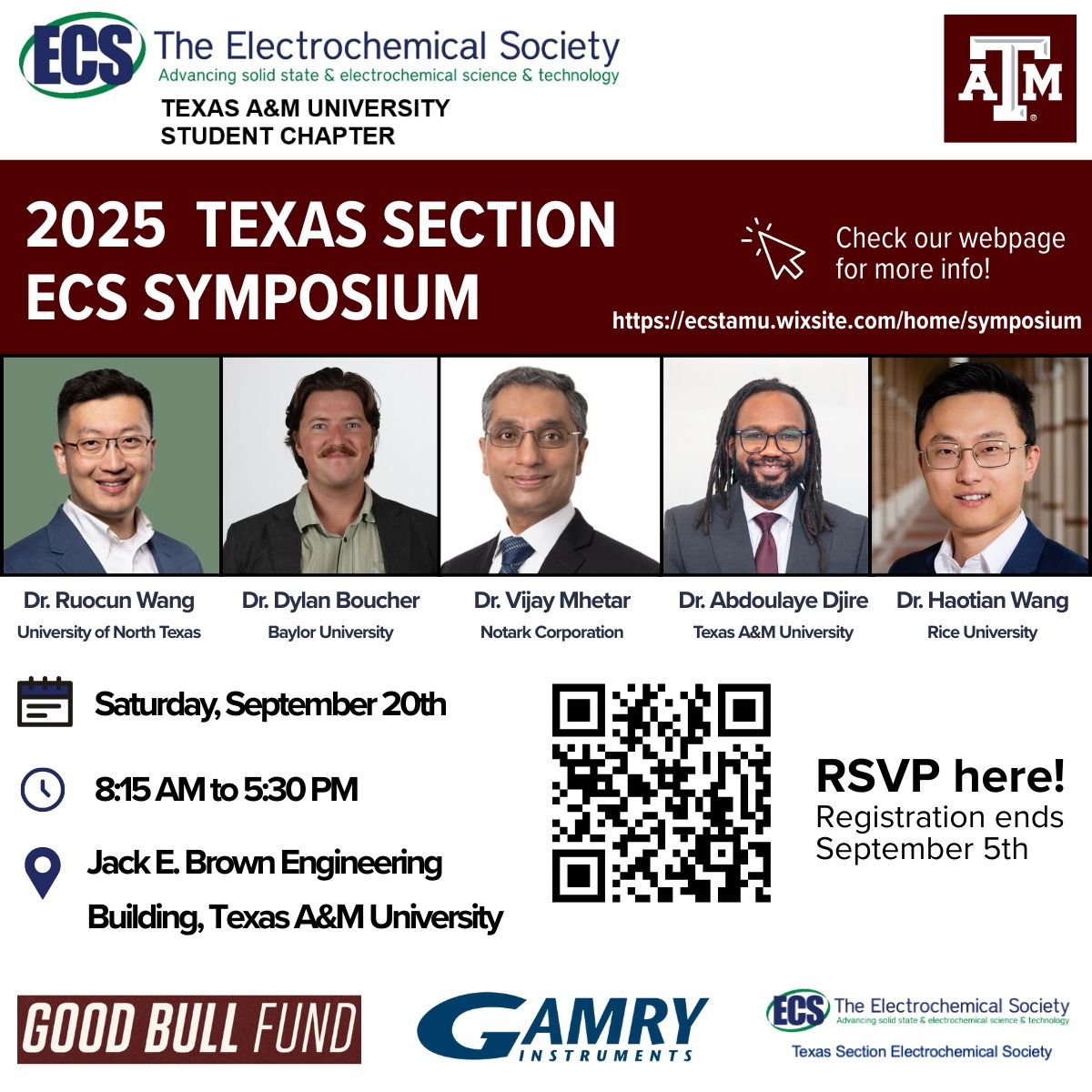
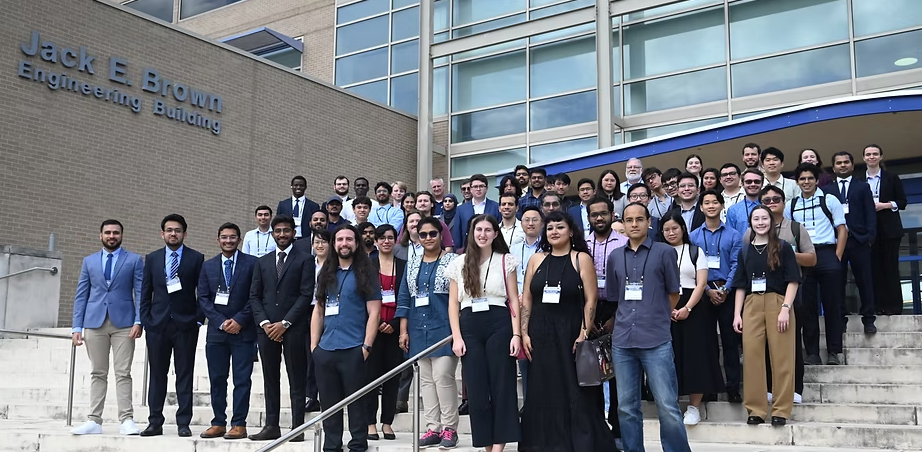
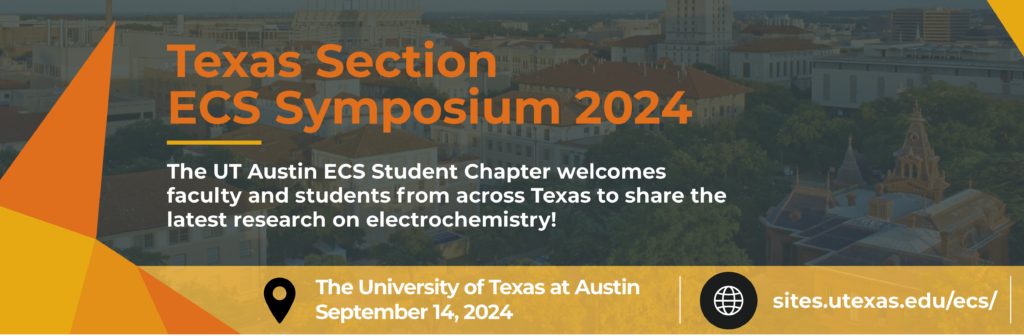
🎯 Don't miss out on 2026! This year's symposium at Texas Tech will be memorable.
Scan to complete your registration
for 2026 ECS Texas Section Symposium
Early registration recommended - Limited spots available!
Time: 1:30 PM
Location: Maddox Room 102
Address: Maddox Engineering Research Center, Texas Tech University, Lubbock, TX 79409
Do you enjoy electrochemistry, networking, and staying up to date with the latest in science? If so, join us! Being part of the ECS student chapter can help you build connections and add meaningful experience to your CV.

Scan to fill out the Google Form
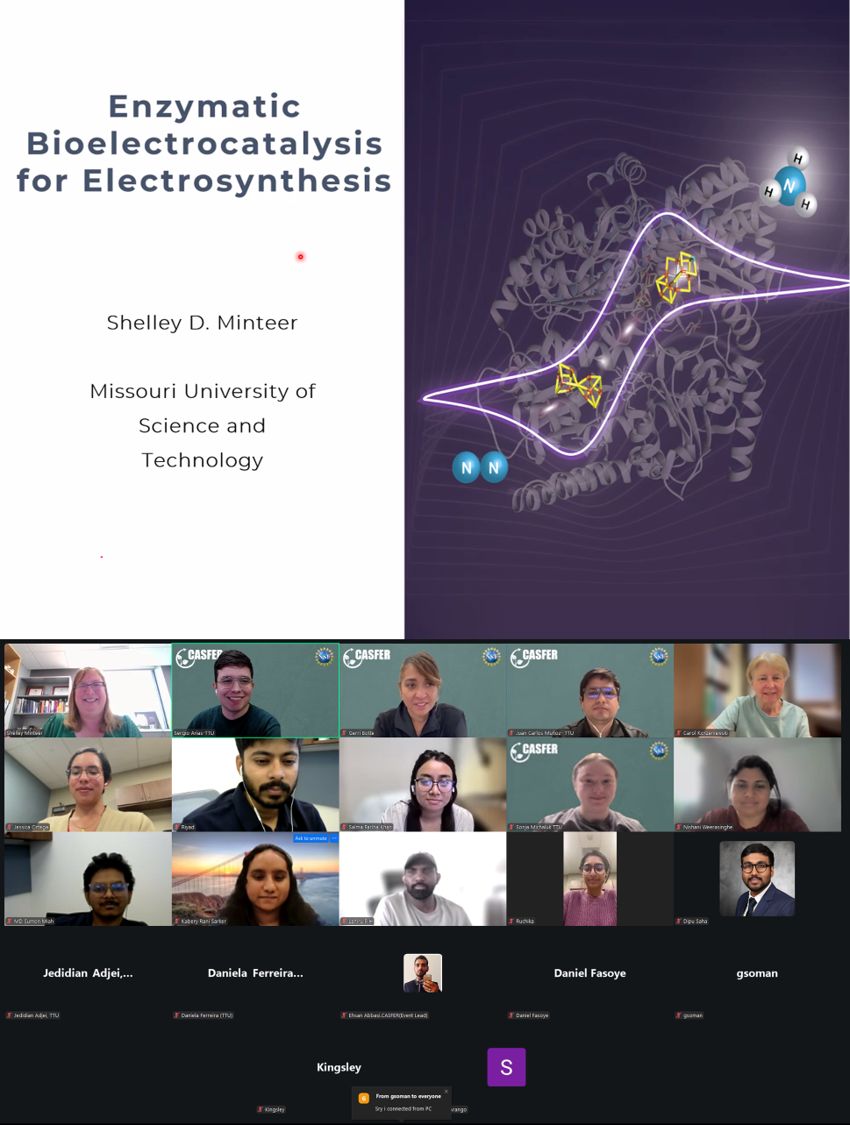
Dr. Shelley Minteer
Professor of Chemistry
Director, Kummer Institute Center for Resource Sustainability
Director, NSF Center for Synthetic Organic Electrochemistry
Missouri University of Science and Technology
Date & Time: April 22, 2026 • 4:00 PM – 5:00 PM CT
Virtual Meeting — Zoom
Meeting ID: 915 0618 7842
In the last 5 years, there have been extensive studies and new materials designed for interfacing biocatalysts with electrode surfaces for applications in energy storage and electrification of the chemical industry. This talk will discuss electroanalytical techniques for studying biocatalysis, including both mediated enzymatic bioelectrocatalysis and direct enzymatic bioelectrocatalysis. The talk will discuss electrode materials innovation for interfacing complex proteins with electrode surfaces as well as using them for electrosynthesis of ammonia as well as other value-added products (i.e. chiral amines, chiral imines, polymers, etc.) with a focus on sustainability in the chemical industry. Finally, this talk will discuss the use of synthetic biology for microbial bioelectrosynthesis of ammonia and other value-added products, as an alternative to enzymatic bioelectrocatalysis.

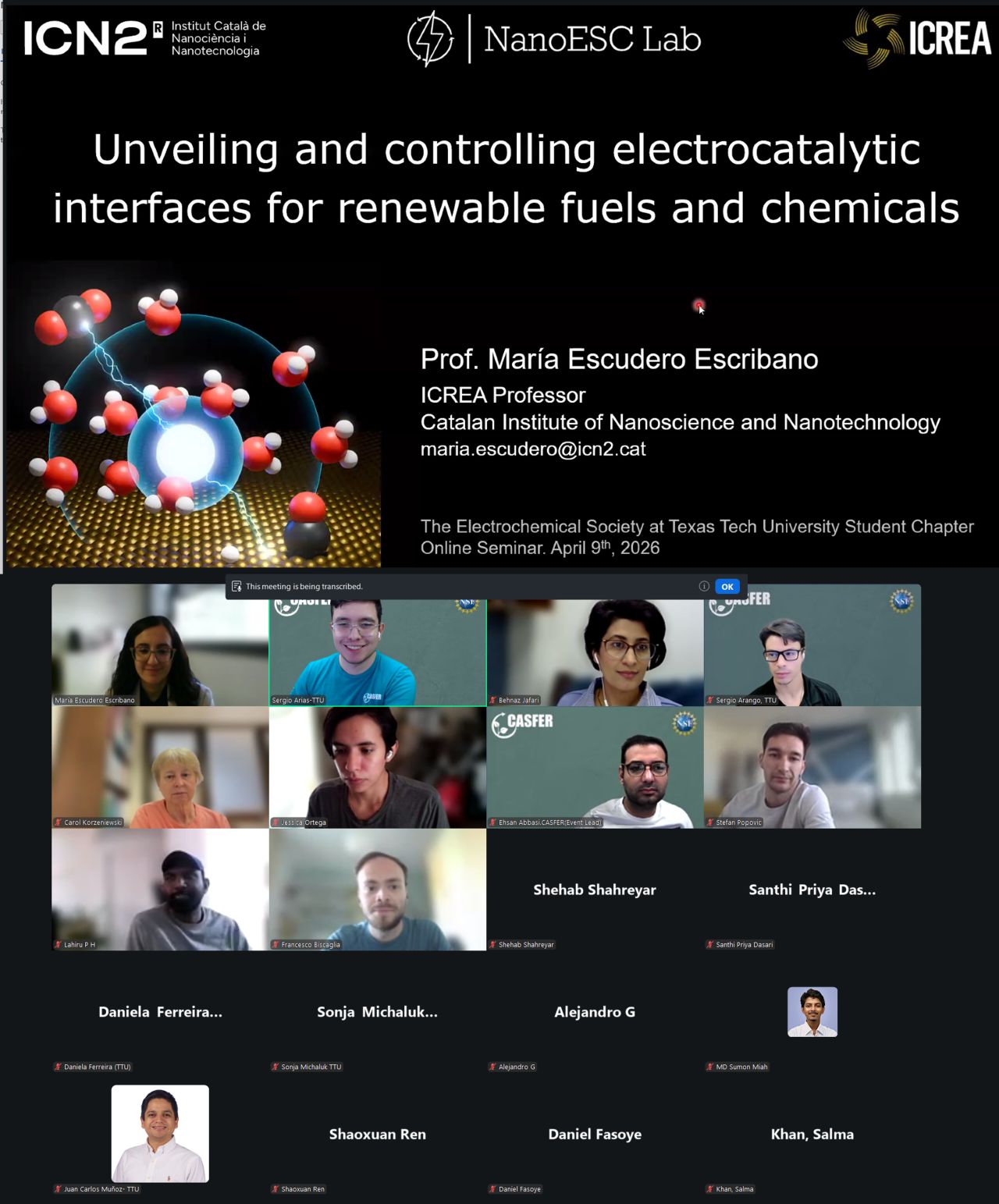
Dr. María Escudero-Escribano
ICREA Professor
Catalan Institute of Nanoscience
and Nanotechnology (ICN2)
Date & Time: April 17, 2026 • 10:00 AM – 11:00 AM CT
Virtual Meeting — Zoom
Meeting ID: 931 5387 5641
Understanding and tailoring the structure of the electrochemical interface is essential to elucidate structure-property relationships and reaction mechanisms in electrocatalysis for Power-to-X technologies. Fundamental studies on well-defined electrified interfaces provide key insights into the factors governing catalytic activity, selectivity, and stability in renewable energy conversion reactions. In this talk, I will present strategies to probe the role of the electric double layer structure [1] in electrocatalytic processes for sustainable fuels and chemicals production. Emphasis will be placed on the use of in situ, surface-sensitive techniques to uncover the interface structure, identify active sites, estimate the electrochemically active surface area [2], and gain mechanistic understanding. I will highlight the importance of combining vibrational spectroscopy with scanning electrochemical microscopy [3] to probe and control electrocatalytic interfaces. These approaches enable the rational design of electrocatalytic materials and interfaces with improved activity and selectivity toward the production of renewable fuels and value-added chemicals. I will show recent examples including the electrochemical conversion of carbon dioxide, nitrate, and methane [4,5] to produce sustainable urea and methanol, respectively. These studies advance the understanding of interfacial processes and guide the development of more efficient and selective electrocatalytic interfaces.
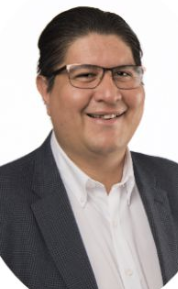
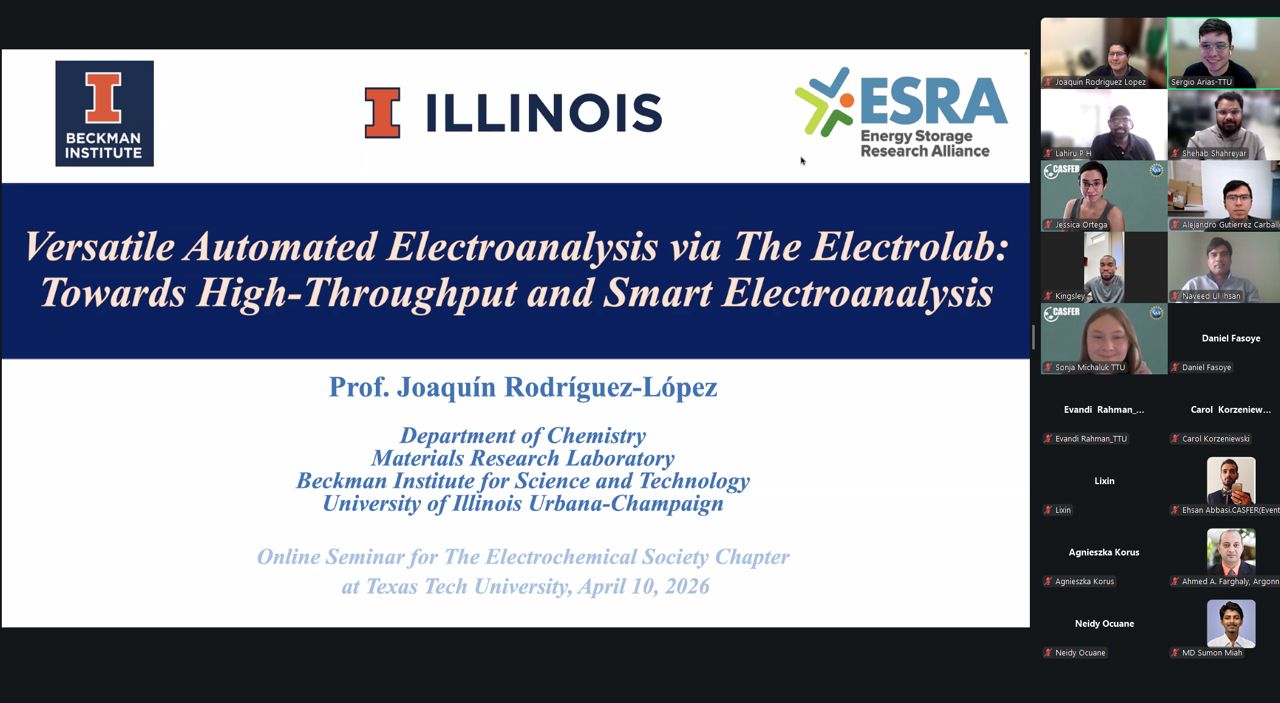
Dr. Joaquín Rodríguez-López
Professor
Department of Chemistry
University of Illinois
Date & Time: April 10, 2026 • 1:30 PM – 2:30 PM CT
Virtual Meeting — Zoom
Meeting ID: 954 3077 9942
Passcode: 795464
Plentiful, high-quality data is key to enabling successful data-driven approaches for the exploration and optimization of chemical systems using modern machine learning and artificial intelligence tools. Particularly for electrochemical energy applications, such as the discovery of materials for batteries and heterogeneous and homogeneous electrocatalysis, there is a pressing need for exploration within vast domains of chemical variables such as concentrations, solvent/electrolyte types, and pH, and of electrochemical ones such as scan rates, electrodes, electrochemical windows, and molecular motifs. To fulfill these needs, our group and collaborators have recently introduced a variety of tools under the umbrella of The Electrolab [1], an automated electrochemical platform that combines hardware, Python-based software [2], automated electrolyte-dispensing robotic settings [4], and custom designed electrochemical chips [4,5] which altogether enable characterization with minimal supervision. Our approaches maximize diagnostic power by making use of powerful concepts including generation-collection experiments which replace otherwise demanding testing conditions, leveraging the advantages of microelectrodes, and also enabling the system to take on the “driven seat” to accomplish unsupervised closed-loop autonomous experimentation (Figure 1) [6]. From simple but tedious experiments such as determining diffusion coefficients, to systematic measurements of homogeneous electrocatalysis for alcohol oxidations, to complex surface interrogation experiments evaluating the redox capacity and dynamics of materials for redox targeted flow batteries, our methods synergistically create new opportunities in electrochemistry.
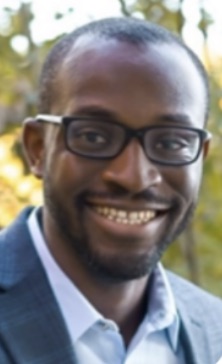
Dr. Chibueze Amanchukwu
Assistant Professor
Pritzker School of Molecular Engineering
University of Chicago
Date & Time: April 6, 2026 • 3:00 PM – 4:00 PM CT
Virtual Meeting — Zoom
Meeting ID: 970 4514 9559
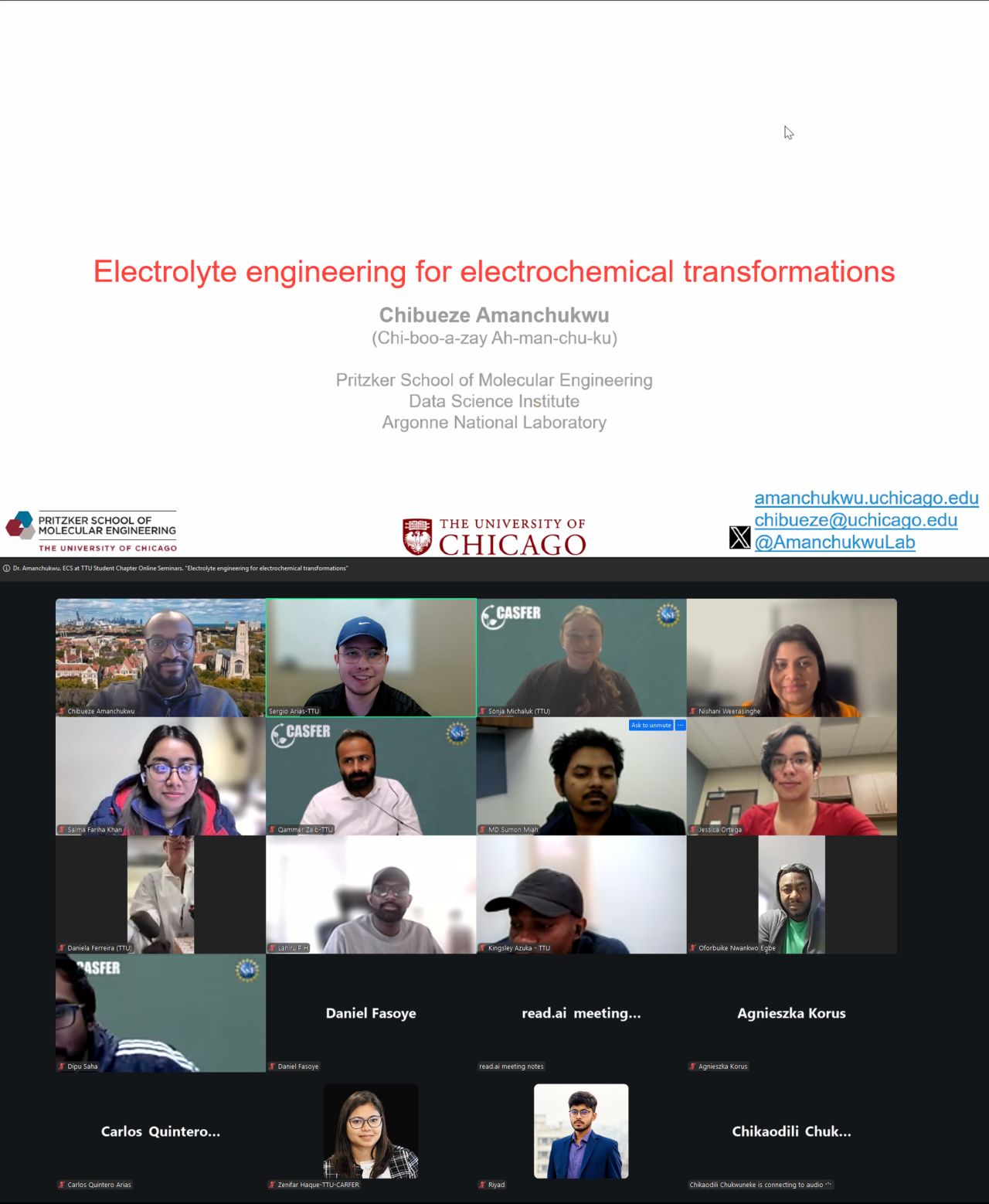
Electrochemical energy storage and conversion technologies are of great importance because they take advantage of ‘renewable’ electrons to drive chemical reactions relevant in devices such as batteries. Electrolytes are the ionically conductive media that is in contact with both electrodes. Hence, electrolyte design often plays a pivotal role in enabling batteries with long cycle life as well as selective and active electrocatalytic transformations. My group is especially interested in how electrolyte design electrochemical reactions. In this talk, I will discuss (1) my groups’ focus on the design of novel electrolytes for next generation batteries with a focus on deploying AI/ML approaches to navigate wide electrolyte chemical spaces and accelerate electrolyte selection. (2) We use ideas from battery electrolyte design to address challenges in electrocatalysis and environmental remediation. We show that by modulating water activity and subsequent reactivity in ‘designer’ electrolytes, undesired hydrogen evolution reaction can be suppressed to enable waste valorization such as CO2 and PFAS conversion. My group is especially focused on how to creatively solve challenges in electrochemistry using tools from any field at our disposal. In so doing, we enable cheaper, earth-abundant, and environmentally responsible energy storage and conversion devices.
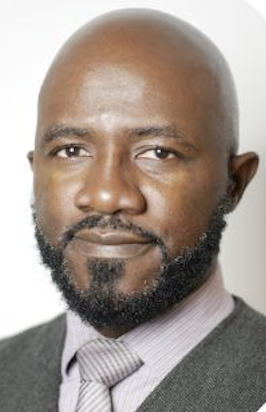
Dr. Damilola Daramola
Assistant Professor
Chemical Engineering Department
Chemistry and Chemical Biology Department
Northeastern University
Date & Time: April 1, 2026 • 4:00 PM – 5:00 PM CT
Virtual Meeting — Zoom
Meeting ID: 994 0911 7257
Passcode: 723200
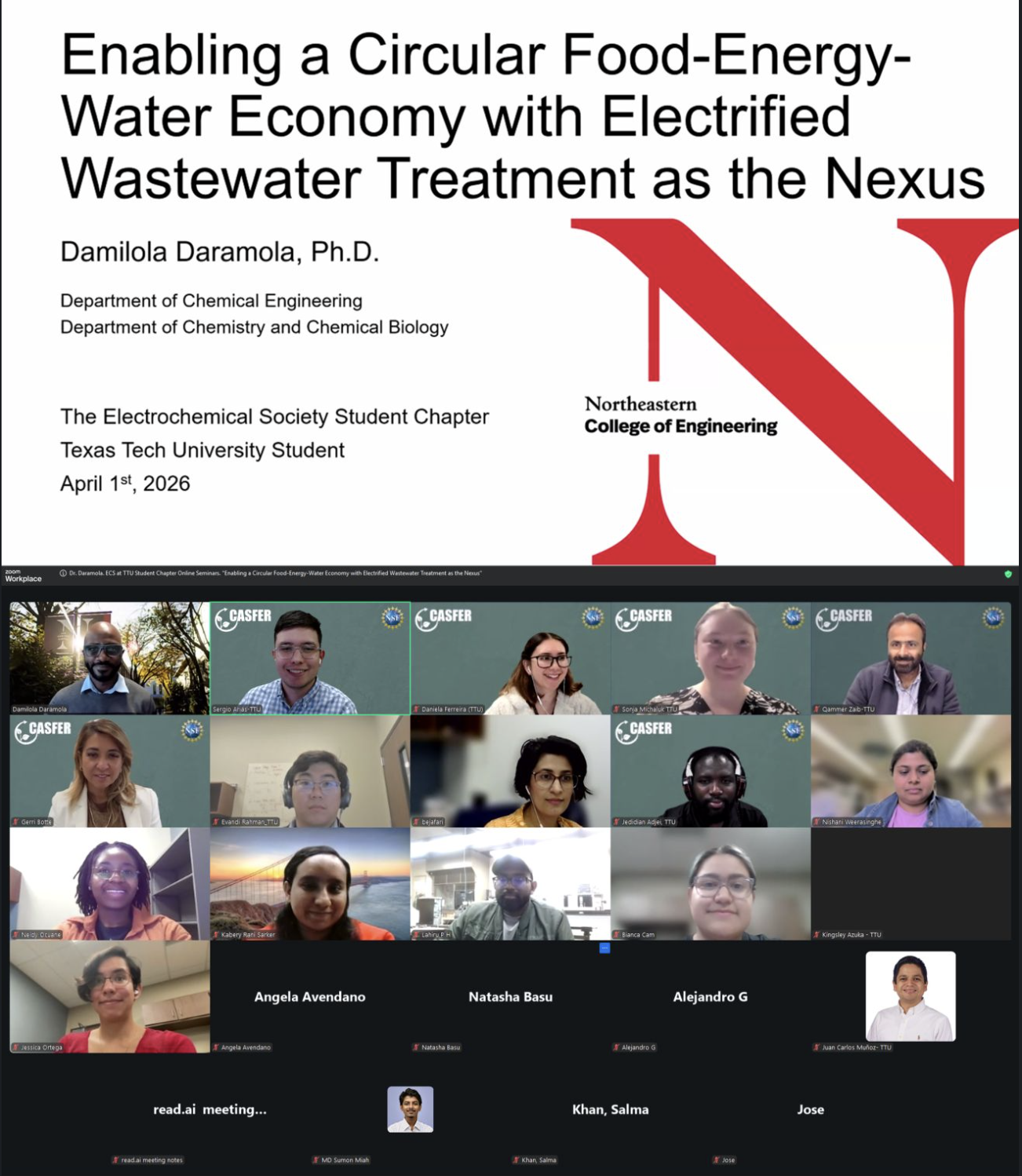
The leaky transport of nutrients between soil application and edible food, combined with the losses of fertilizer after application has ensured that macronutrients – N and P – accumulate as waste in our current linear food economy. The impact of this linear economy is further exacerbated by the energy required to fix these nutrients and the negative impact these nutrients pose to natural water systems leading to a convergence of systems: the Food-Energy-Water (FEW) Nexus. Although not immediately obvious, this Nexus also exists at municipal wastewater treatment facilities, where the impact of this linear economy can be reversed in the form of Water, Energy and Food Recovery. This recovery approach enables a circular economy and could alleviate current concerns around the FEW systems due to global disruptions and the much-needed path towards global sustainability. What if we could recapture nutrients from waste using a technique that both leverages renewable energy and is economically scalable at small-scale facilities? Further, what if these recaptured nutrients could be delivered in a manner that manages nutrient availability and thus reduces downstream inefficiency? These ideas are the subject of this talk and will be discussed in the context of bench-scale electrochemistry, materials characterization, thermodynamic modeling and design of experiments.
Winner Announced: Sunday, March 23, 2026
We are thrilled to announce the winner of our logo design competition! After an amazing response from our community and voting on Instagram, we have selected our new official chapter logo.

The new logo represents innovation, excellence, and our commitment to advancing electrochemical science and technology. It perfectly captures our chapter's vision and values.
Congratulations to our contest winner for their outstanding design! 🎉
Voting Period: March 16 - March 23, 2026
Community voting phase for our logo design competition. Three finalist designs were selected and presented for public voting on Instagram.
Finalist Options: Logo1, Logo2, Logo3
Historical Note: The community voted on Instagram to select the winning design from these three outstanding options.


ECS - The Electrochemical Society at Texas Tech University Student Chapter, in collaboration with CASFER Student Leadership Council, participated in Día de Ciencias at the Science Spectrum in Lubbock, organized by SHPE at Texas Tech University.
During the event, we shared hands-on demonstrations with children and families focused on electrochemistry, fuel cells, and solar-powered cars. Experiences like this help spark curiosity, inspire future scientists and engineers, and make STEM more accessible to our community.
Visit LinkedIn PostIntroduction to ECS chapter activities and 2026 planning session
Welcome session for new members with ECS overview and benefits
End-of-semester celebration and networking event
Contact our leadership team to manage events on this calendar:
Events are easily organized between upcoming and past sections - contact leadership for updates